

One of Procurement Leaders’ community goals for 2026 is to better understand how human skills and capabilities must evolve as organisations continue to embrace and implement artificial intelligence.
As a community, our ambition is to build blueprints for future talent, artefacts that will help CPOs to plan for where to invest their time, energy and budget when it comes to team development and recruitment. How? Through deep discussion, collaboration and debate.
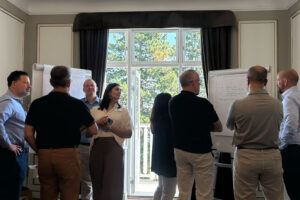
A recent virtual workshop helped members to think about what an action plan for new talent strategies might look like in this brave new world. And it was a discussion that led to a clear framework for how CPOs should approach the issue.
First, redefine entry-level roles. Those who joined the session were accepting that entry-level roles must evolve from a focus on analytics and transactional activities to analytics and domain expertise. Candidates with subject-matter expertise (rather than procurement knowledge) and outstanding critical-thinking capabilities should be prioritised.
Second, CPOs should be working to pivot core competences to fundamentally human skills such as storytelling and influencing. If robots are pulling the data, humans must turn that information into compelling business cases and stories to influence both internal and external partners. Relationship management will be key, with a premium placed on strong emotional intelligence, enabling new sources of value to be found outside of traditional procurement deliverables.
Third, procurement functions must move into “test and train” mode by for example, establishing reverse mentoring to pair more tenured staff with AI natives, formalising prompt engineering as a core skill and building sandbox environments to test whether teams adopt a healthy scepticism of AI-generated outputs.
Fourth, consider embracing the “great flattening trend” to remove layers of bureaucracy, hierarchy and inefficiencies. While experience and wisdom cannot be replaced, pure management positions are ripe for transformation – such as in Bayer’s Dynamic Shared Ownership model.
In this example, the German life science and pharmaceutical company has reduced headcount by more than 12,000 and management positions by 50%. It says this will result in 95% of decisions being made by those on the ground and an environment where “managers become coaches, and innovation cycles are as quick as 90 days”.
In summary, CPOs must redefine, pivot, test and flatten as they continue their voyage into uncharted territory.
To receive weekly insights from the Procurement Leaders community, sign up to the CPO Crunch newsletter using the link at the top of this page.