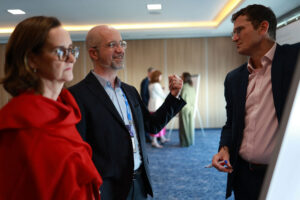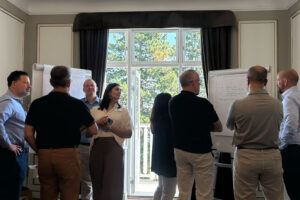
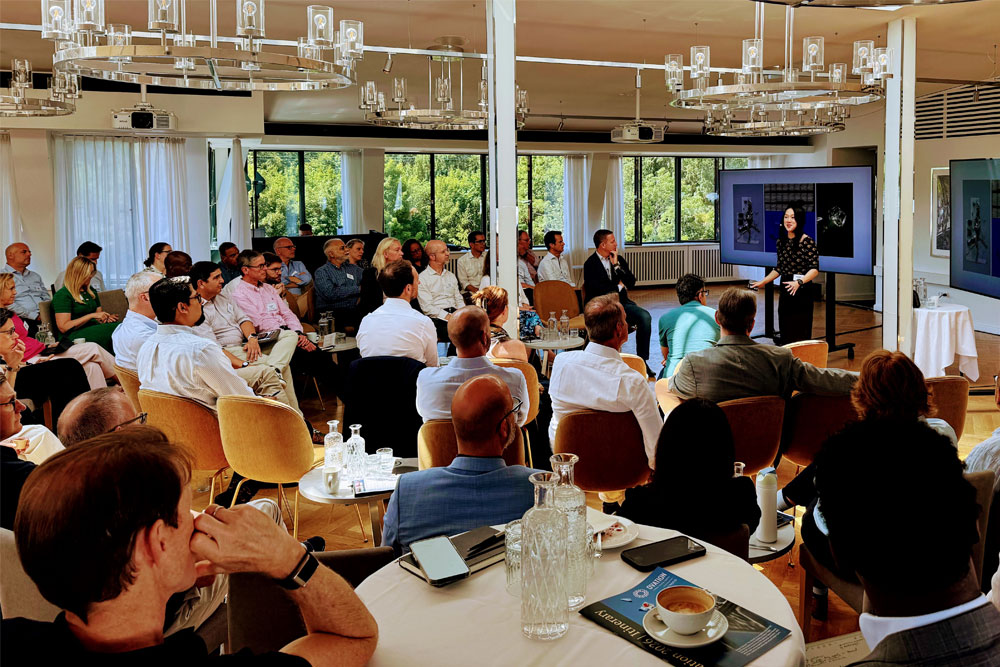

When you bring together more than 50 group-level CPOs from a progressive, cross-industry and global cohort of multinational organisations, then add thinkers whose work encompasses national security, innovation, policy, educational reform, and human and AI collaboration, fireworks happen.
That’s exactly what we did last week at Procurement Leaders’ CPO retreat, Ovation, which took place in Denmark. It was a fizzing, popping, energising and thought-provoking three days, which led to a huge amount of reflection for all.
I have a long list of takeaways but I’ll share just a few for now – some of which follow on from my note last week in which I (again) reiterated the importance of supplier collaboration and innovation to procurement’s future value proposition.
First, and this might seem absurdly obvious, procurement’s work is fundamentally important. Supply chains should be viewed as the arteries of the global economy, bringing oxygen in the form of capital to different parts of the world. The decisions CPOs make in terms of where to source and where to invest are crucial, and contribute to far more than wealth creation.
As part of our pre-event pulse survey, we asked how significantly CPOs had shifted toward local supply; 11% said they had done so “drastically” by aggressively reshoring core categories. A further 37% said they had done so “moderately” by testing local alternatives. The global trade landscape is changing, and it’s being driven by myriad forces that are likely irreversible, including climate change, China’s continued rejuvenation and a slow but deliberate move away from the dollar.
Second, and I’ve discussed this before, is the reshaping of the procurement operating model itself. Functions will be leaner, less bottom-heavy, and more focused on creating collaborative value with suppliers. I had many conversations with CPOs who shared how their functional footprints would be leaner in future, but with a focus on higher-value work.
This, in turn, demands people with different capabilities. Larry Kramer, president and vice chancellor of the London School of Economics, put it well when he explained the six human capabilities he considers crucially important for the future: critical thinking; problem solving; learning to learn; communication; collaboration; and learning from failure. I won’t fly the flag for supplier-enabled innovation again, but my point remains.
But perhaps what I’m reflecting on most is that when you put all of the issues together; the combined smorgasbord of climate change, geopolitical manoeuvrings, technological disruption, national populism, demographic shifts, and so on, the worlds of national governance and corporate strategy must become much closer. Governments simply have to work with boardrooms more closely, and vice versa.
It was also something that Anja Dalgaard-Nielsen, vice dean, geopolitics and business security at Copenhagen Business School (CBS), reflected on. Having joined this newly created faculty from the Danish Intelligence Services, and with former German vice chancellor Robert Habeck joining her as professor of practice earlier this month, CBS is clearly taking this merging of worlds seriously.
As CBS noted in a statement announcing Habeck’s appointment: “Geopolitics is no longer something companies can leave to foreign ministries and policy analysts. The war in Ukraine, the rivalry between the United States and China, fragile supply chains, and competition over energy, technology and critical raw materials have become part of the strategic reality facing businesses across Europe.”
To Europe, I would add the world.
To receive weekly insights from the Procurement Leaders community, sign up to the CPO Crunch newsletter using the link at the top of this page.