

In late-August 2026, Microsoft cofounder Bill Gates published an essay that addressed the potential implications for society of the continued unbridled march of artificial intelligence.
To say it was a bleak read is probably overdoing it, but the piece certainly raised a number of worrying scenarios: from the loss of jobs at scale, to enabling people to do more harm more easily, to the stunting of the development of children. “Even under the best circumstances, the transition to this new AI era will be one of the most turbulent times in human history,” he wrote.
He did provide some balance by sharing his view on the positive impact the technology could bring, but there’s no doubt that Gates believes we must address the risks before we’re afforded the luxury of celebrating the potential benefits. I’d encourage everyone to take the time to read it.
I raise it here for two reasons, both of which can be traced back to our CPO retreat Ovation, which took place in July.
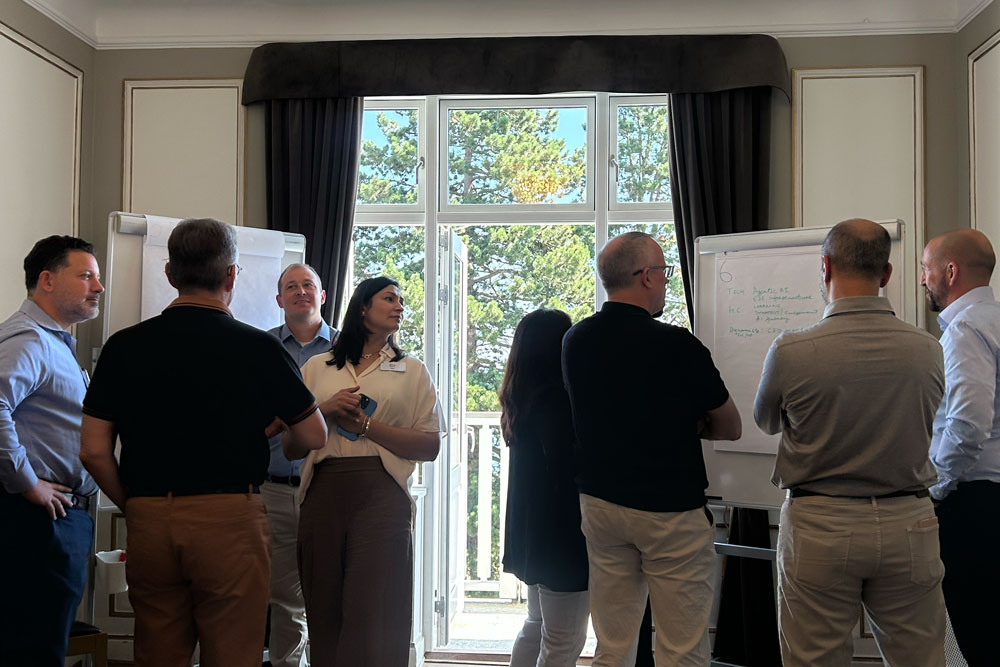
During that retreat, we had a session in which we tasked CPOs to think boldly, to break their current operating models and to be honest about the impact AI adoption might have on team structure and size.
We were deliberately challenging.
Why? Because on the one hand, I hear CPOs claiming that automation will free up team members to do higher-value work; on the other, I hear plenty of stories of CPOs reducing headcount significantly because of automation, or of CFOs and CEOs mandating the same. Both scenarios can’t be true.
What came out of those discussions was fascinating, with anywhere between 30% to 80% headcount reduction being cited as a potential outcome. While the workshop was deliberatively provocative and designed to have members challenge themselves and think at the extremes, the conclusions reached could directly contribute to some of Gates’ fears.
The second reason is because one of our speakers, London School of Economics president and vice dean, Larry Kramer, argued that to successfully transition to this new era, we must think of people as workers and not as consumers.
Doing the latter has led to decade after decade of cost reduction, efficiency improvements and intense competition, to which the procurement function has been an important contributor. Doing the former might just protect human dignity and equality but will demand much greater government intervention and a doubling down on international multilateralism.
While this probably won’t make it onto your daily to-do list, as enterprise officers and leaders of people, these types of debates will become more prevalent and more urgent in the (not too distant) future.
To receive weekly insights from the Procurement Leaders community, sign up to the CPO Crunch newsletter using the link at the top of this page.